Did you know that over 40 percent of small businesses admit to experiencing payroll errors each year? Managing wages, taxes, and compliance can feel overwhelming, especially as a company grows. Automating payroll can turn this tedious task into a smooth and accurate process, saving valuable hours and lowering the risk of costly mistakes. Understanding payroll automation helps employers protect their business while creating a better experience for every employee.
Table of Contents
- What Is Payroll Automation? Core Concepts Explained
- Types of Payroll Automation Systems for Businesses
- How Automated Payroll Streamlines Operations
- Legal Compliance and IRS Guidelines in Payroll
- Cost Savings, Accuracy, and Risk Reduction Benefits
- Common Pitfalls When Transitioning to Automation
Key Takeaways
| Point | Details |
|---|---|
| Payroll Automation Benefits | Automating payroll reduces human error, saves time, and allows small businesses to focus on growth rather than administrative tasks. |
| In-House vs. Outsourced Options | Businesses can choose between in-house payroll systems for greater control or outsourced services for professional expertise and reduced staffing needs. |
| Legal Compliance Importance | Maintaining strict adherence to IRS regulations and legal guidelines is crucial to avoid penalties and ensure accuracy in payroll processing. |
| Transition Challenges | Successful implementation of payroll automation requires thorough data migration strategies, comprehensive employee training, and an understanding of system capabilities to avoid common pitfalls. |
What Is Payroll Automation? Core Concepts Explained
Payroll automation transforms how small businesses manage employee compensation by leveraging technology to streamline complex financial processes. According to Accounting Insights, an automated payroll system is a sophisticated software solution designed to manage the entire payroll workflow, from calculating wages to withholding taxes and issuing payments.
At its core, payroll automation replaces manual, error-prone spreadsheets and calculations with intelligent software that handles repetitive tasks with precision. The system typically integrates multiple functions, including:
- Automatic wage calculations based on hours worked
- Precise tax withholding computations
- Direct deposit processing
- Tracking employee time and attendance
- Generating comprehensive payroll reports
The primary goal of payroll automation is dramatically reducing human error and administrative overhead. By eliminating manual data entry and complex calculations, businesses can save significant time and resources. Small business owners can redirect their energy from tedious paperwork toward strategic growth initiatives, knowing their payroll processes are accurate, compliant, and efficiently managed.
Implementing Payroll Management solutions allows entrepreneurs to transform their financial operations from a time-consuming chore into a streamlined, reliable system that supports business scalability and employee satisfaction.
Types of Payroll Automation Systems for Businesses
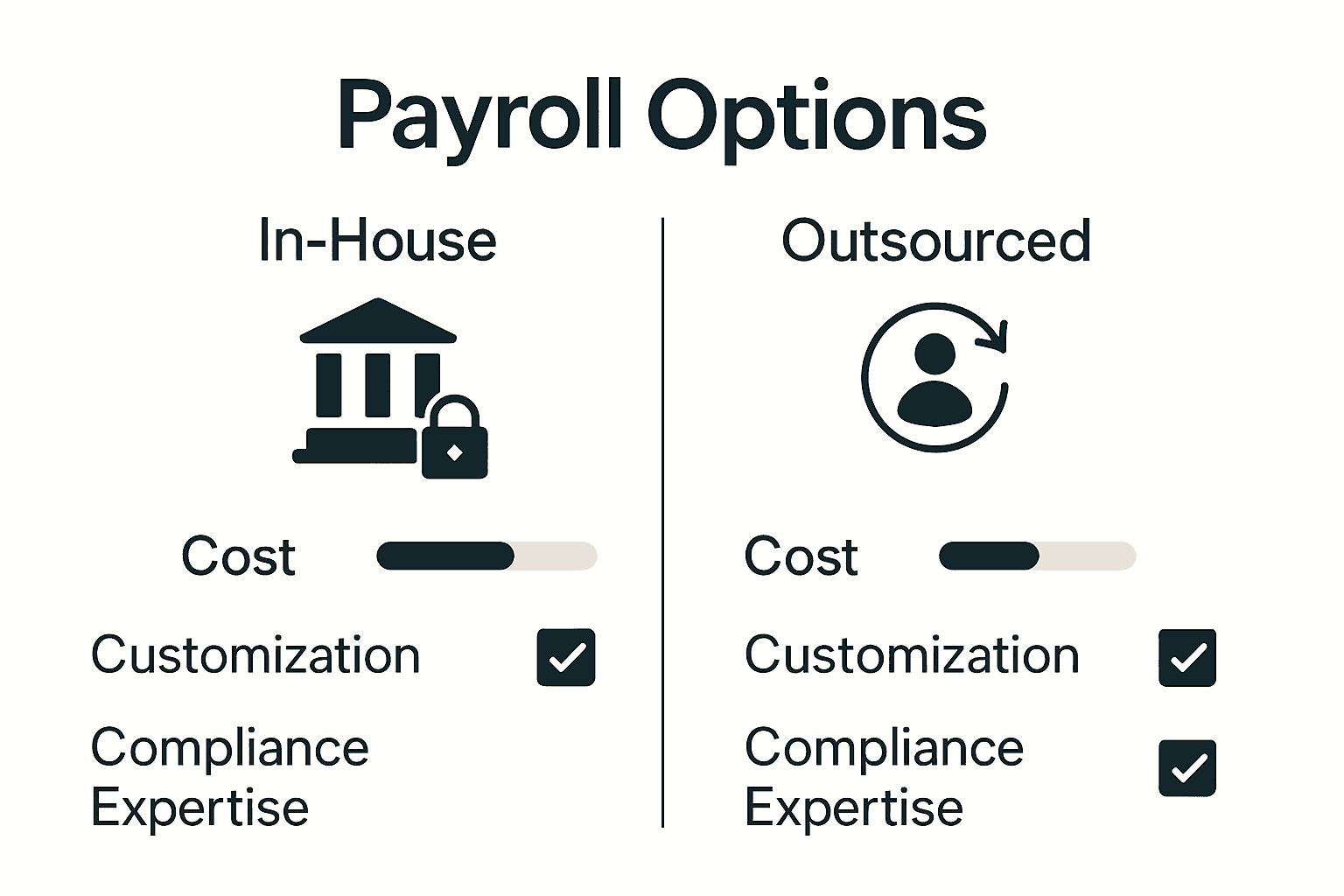
Payroll automation systems are not one-size-fits-all solutions. According to Payroll Information, businesses can primarily choose between two fundamental approaches: in-house payroll systems and outsourced payroll services. Each option offers distinct advantages and challenges for small business owners seeking efficient financial management.
Here’s a comparison of in-house payroll systems and outsourced payroll services:
| Feature | In-House Payroll Systems | Outsourced Payroll Services |
|---|---|---|
| Control | Complete internal control | Relies on external provider |
| Data Privacy | High Internal management | Shared with third party |
| Customization | Greater ability to customize | Limited customization |
| Staffing Needs | Requires dedicated payroll staff | Reduces need for internal staff |
| Tax Compliance Expertise | Depends on internal knowledge | Professional compliance support |
| Scalability | May need manual upgrades | Easily scalable |
| Cost Structure | Software & staff expenses | Service fee Potential savings |
In-House Payroll Systems provide businesses complete control over their payroll processes. These systems typically involve:
- Direct management of employee compensation
- Using internal software or custom-built solutions
- Maintaining full financial data privacy
- Requiring dedicated internal financial personnel
- Greater potential for customization
Outsourced Payroll Services, by contrast, transfer payroll processing responsibilities to external specialized providers. As Payroll Information notes, these services offer businesses an alternative approach to managing complex compensation workflows. Outsourced systems generally feature:
- Professional expertise in tax compliance
- Reduced administrative burden
- Scalable solutions for growing businesses
- Access to advanced technological infrastructure
- Potential cost savings on internal financial staffing
Choosing between in-house and outsourced systems depends on your business’s specific needs, budget, and operational complexity.
IMAGE:descriptive_key_1] [Payroll Management solutions can help you evaluate which approach aligns best with your company’s financial strategy and growth objectives.
How Automated Payroll Streamlines Operations
Payroll automation fundamentally transforms operational efficiency for small businesses. According to Greater Collingwood, these systems streamline operations by integrating critical functions like time tracking, tax calculations, and employee self-service portals, dramatically reducing administrative workload and improving overall accuracy.
The key operational benefits of automated payroll systems include:
- Instant time tracking and attendance monitoring
- Automatic tax calculation and withholding
- Seamless direct deposit processing
- Real-time financial reporting capabilities
- Integrated compliance management
Compliance and accuracy are paramount in payroll management. As Accounting Insights highlights, automated systems ensure timely and precise payments while maintaining strict adherence to complex tax regulations. This approach significantly minimizes human error risks associated with manual payroll processing.
For small businesses looking to optimize their financial operations, exploring Services that offer comprehensive payroll automation can transform how you manage employee compensation, giving you more time to focus on strategic business growth.
Legal Compliance and IRS Guidelines in Payroll
Payroll compliance represents a critical responsibility for small businesses navigating complex legal requirements. According to Payroll Information, payroll systems must rigorously adhere to legal guidelines, ensuring accurate tax calculations, timely filings, and meticulous record-keeping to prevent potential penalties and maintain regulatory compliance.
The key legal considerations for payroll management include:
- Accurate employee classification (W-2 vs 1099)
- Precise tax withholding calculations
- Timely submission of federal and state tax reports
- Maintaining comprehensive employee payment records
- Adhering to minimum wage and overtime regulations
IRS regulations demand unwavering attention to detail. As Payroll Information emphasizes, businesses must maintain strict compliance through accurate reporting and punctual submission of payroll taxes to mitigate potential legal complications. Failure to comply can result in significant financial penalties and potential legal challenges that could jeopardize a business’s financial stability.
Small business owners can leverage Payroll Management solutions to navigate these complex regulatory landscapes, ensuring they remain compliant while focusing on core business growth and operational objectives.
Cost Savings, Accuracy, and Risk Reduction Benefits
Automated payroll systems represent a transformative solution for small businesses seeking financial efficiency. According to Accounting Insights, these systems deliver substantial benefits including reduced processing costs, dramatically improved wage calculation accuracy, and significant reduction in compliance violation risks.
The primary financial advantages of payroll automation include:
- Elimination of manual data entry expenses
- Reduction of administrative personnel costs
- Minimized risk of costly computational errors
- Decreased potential for compliance penalty fees
- Streamlined financial resource allocation
Cost reduction goes beyond simple number crunching. By automating repetitive tasks, businesses free up critical human resources to focus on strategic growth initiatives. The precision of automated systems means fewer mistakes, which translates directly into financial savings. Potential errors in manual payroll processing can cost businesses thousands in miscalculations, penalty fees, and time-consuming corrections.
Small business owners can leverage Services that offer comprehensive payroll automation to transform their financial operations, turning potential administrative chaos into a streamlined, cost-effective process that supports sustainable business growth.
Common Pitfalls When Transitioning to Automation
Transitioning to automated payroll systems is rarely a smooth, straightforward process. According to Payroll Information, businesses frequently encounter significant challenges during implementation, including complex data migration issues, intricate system integration problems, and the critical need for comprehensive staff training to ensure a successful transition.
The most common pitfalls small businesses encounter include:
- Underestimating the time required for full implementation
- Insufficient data validation and migration strategies
- Lack of comprehensive employee training
- Inadequate understanding of system capabilities
- Failing to develop a robust change management strategy
Organizational readiness is the cornerstone of successful payroll automation. As Payroll Information highlights, many businesses overlook the importance of addressing employee concerns and expectations during system transitions. This can lead to resistance, reduced productivity, and potential errors that compromise the entire automation effort.
Small business owners can mitigate these risks by partnering with Services that offer expert guidance, ensuring a smooth, strategic approach to payroll system transformation that minimizes disruption and maximizes operational efficiency.
Take Control of Your Payroll with Expert Guidance
Facing the complexities of payroll automation can feel overwhelming, especially when accuracy and compliance are non-negotiable. This guide highlights common struggles such as manual errors, tax regulations, and system transitions that small business owners often encounter. If you are seeking a trusted partner to navigate these challenges and implement seamless payroll management solutions, you are in the right place.
At Accuracy Accounting, Gina Ortiz and her team specialize in turning financial chaos into clarity. With personalized support tailored to your business needs, you gain precise payroll processing that eliminates costly errors and compliance risks. Don’t delay fixing your payroll headaches. Visit Accuracy Accounting today to discover how our professional services can help you streamline operations and build confidence in your financial future.
Frequently Asked Questions
What is payroll automation?
Payroll automation is the use of technology to streamline and manage payroll processes, reducing manual errors and administrative overhead through automated calculations, tax withholdings, and payment processing.
What are the benefits of automating payroll for small businesses?
Automating payroll can lead to significant cost savings, increased accuracy in wage calculations, timely compliance with tax regulations, and freeing up resources for strategic business initiatives.
What types of payroll automation systems are available for businesses?
Businesses can choose between in-house payroll systems, which provide complete control over payroll management, and outsourced payroll services, which offer professional compliance support and reduce internal administrative burdens.
How does payroll automation enhance compliance and reduce risks?
Payroll automation enhances compliance by ensuring accurate tax calculations and timely submissions, significantly reducing the risk of costly penalties associated with manual payroll processing errors.